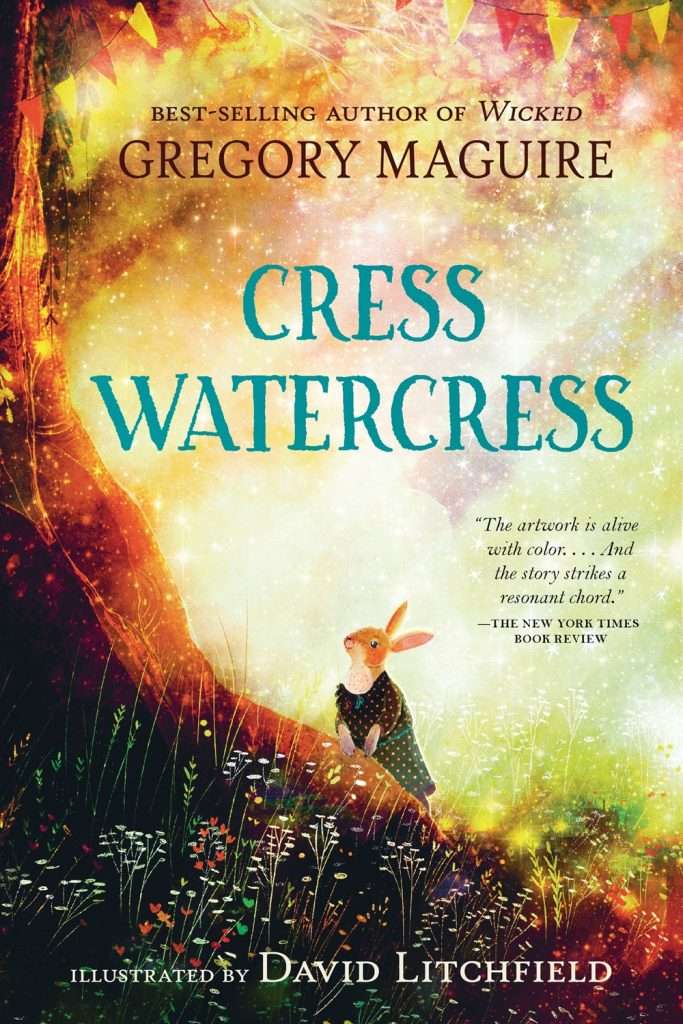
“No one bothered to lock the door or to look back at nobody waving goodbye.”
So begins the journey of Cress, her mama, and her little brother, Kip, as they leave their snug home in the rabbit warren. Papa has not returned from his journey to gather honey so the family needs a new place to live as Mama takes on the role of a single parent. They are heading for a new life in the basement of the Broken Arms, an oak tree that serves as an apartment building.
At the Broken Arms, they meet an eclectic cast of animal characters including:
- Mr. Titus Pillowby Owl, the aloof landlord who makes a note of everyone’s activities
- Lady Agatha Cabbage, a self-absorbed skunk known for putting on airs
- The Oakleaf Family of squirrels, with four rambunctious sons, including steadfast Finian
- Manfred Crabgrass, the superintendent mouse with a flair for vaudeville
- Fricassee Sunday, a hen who almost blunders into an untimely stewpot
- Natasha Nasturtium, a rabbit with an attitude
- Tunk the Honeybear, whose menacing looks may be deceiving
- Monsieur Reynard, who is just as menacing as he appears
- The Final Drainpipe, a snake to be avoided at all costs
Gregory Maguire weaves these characters into a tapestry that includes small moments like appreciating the moon’s reflection and thrilling moments like rafting over a waterfall.
“Maybe that is what growing up was all about – not knowing yourself, over and over again.”
Cress Watercress is a breath of fresh air in the canon of animal stories. It avoids any whiff of treacly sweetness, instead providing sharply drawn characters full of dimension, flaws, questions, and surprises. The parents are a bit harried, doing their best just like every human parent. The friendships have their ups and downs – loyalty, laughter, hurt feelings, apologies. And Cress is trying to grow up and be the rabbit she is supposed to be… whatever that is.
“The slender moon became fretted by the branches of a dead tree. It looked like a sideways smile of broken teeth…”
Gregory Maguire’s writing just sings. He trusts his readers to appreciate beautifully turned phrases, lyrical descriptions, and sharp dialog, with poetry-like prose that begs to be read aloud and savored. The luminous, full-color art by David Litchfield acts like the best picture book illustrations, expanding the story rather than simply depicting it. The pictures will keep your younger listeners entranced as the story unfurls over a sprightly 215 pages.